Beyond the Riff
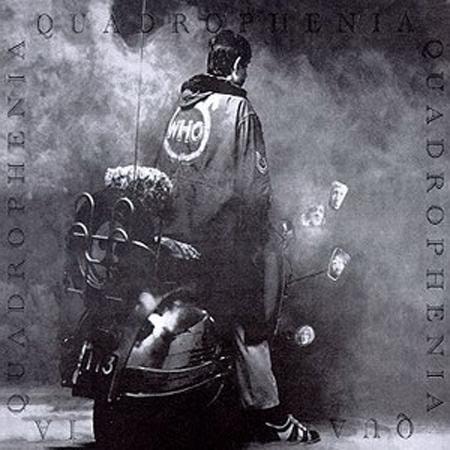
Quadrophenia: When Rock Music Became Great Art
By any reasonable standard, there are only a handful of albums that transcend the boundaries of music and enter the larger conversation of art itself. The Who's Quadrophenia, released in 1973, belongs in that rare company.
October 16, 2026
Beyond Tommy: The Achievement That Surpassed the Landmark
For much of its life, Quadrophenia existed in the shadow of Tommy. That was perhaps inevitable. The Who's 1969 rock opera became a cultural phenomenon and helped establish the notion that rock music could sustain ambitious narratives and themes. Yet as the decades have passed, the critical consensus has steadily shifted. Increasingly, listeners and musicians alike have come to view Quadrophenia not merely as the successor to Tommy, but as the work in which Pete Townshend's artistic ambitions fully matured.
The distinction is important. Tommy operates largely in the realm of myth, allegory, and symbolism. Its protagonist is extraordinary by design, a figure through whom larger spiritual and cultural ideas can be explored. Jimmy, the troubled young Mod at the center of Quadrophenia, is the opposite. He is painfully ordinary. He is confused, insecure, angry, impulsive, romantic, self-destructive, and desperate for meaning. It is precisely because he lacks heroic qualities that he remains one of the most compelling characters in popular music.
In interviews reflecting on his career, Pete Townshend has repeatedly spoken of Quadrophenia as the strongest artistic achievement of The Who, praising the coherence of its narrative and emotional vision. That judgment has become increasingly difficult to dispute. The album retains all of the ambition that made Tommy revolutionary, but grounds that ambition in recognizable human experience, creating a work that feels simultaneously epic and intimate.
The Story of Jimmy and the Search for Self
On the surface, Quadrophenia is a story about a particular place and time. Set against the backdrop of Britain's Mod movement and the famous clashes between Mods and Rockers during the 1960s, it follows Jimmy through a succession of frustrations and disillusionments. He struggles with his parents, his job, his romantic life, his friendships, and ultimately his own sense of identity.
What elevates the album beyond social realism, however, is the universal nature of Jimmy's crisis. Every generation inherits its own fashions, tribes, ideologies, and subcultures. What Quadrophenia understands with unusual clarity is that these identities often serve as masks for deeper uncertainties. Jimmy believes his clothes, his scooter, his music, and his social circle define him. Gradually he discovers that none of these things can answer the questions that truly matter. When the myths surrounding his heroes collapse and the certainty provided by his chosen tribe proves inadequate, he is forced into a confrontation with himself.
The album's enduring relevance stems largely from this insight. While the details of Mod culture belong to a specific moment in British history, Jimmy's search for authenticity feels timeless. Listeners separated from the work by decades often discover that they recognize themselves in him. The technologies have changed. The social structures have changed. The anxieties have not. In an era characterized by social media, carefully curated identities, and increasingly fragmented communities, the album's exploration of belonging, self-definition, and alienation may be even more resonant than it was in 1973.
A Masterclass in Musical Storytelling
The greatness of Quadrophenia would be impossible without music equal to its thematic ambitions. Fortunately, the album represents one of the most remarkable collective performances ever committed to tape. Townshend's writing throughout the record displays an extraordinary level of structural sophistication. Musical motifs recur throughout the album, themes evolve and reappear in altered forms, and synthesizers are employed not as novelties but as compositional tools capable of binding together an extensive narrative. Although the term "rock opera" is frequently applied to the album, the comparison often undersells what is actually happening. In many respects, Quadrophenia functions less like a conventional collection of songs than a large-scale musical composition whose individual movements gain additional meaning through their relationship to the whole.
The performances themselves are equally remarkable. John Entwistle's bass playing on "The Real Me" remains one of the most celebrated performances ever recorded on the instrument, demonstrating a melodic inventiveness that continues to astonish musicians more than fifty years later. Keith Moon's drumming, meanwhile, provides the album with its emotional volatility. Often described as chaotic, Moon's performance on Quadrophenia reveals a deeper discipline, using explosive fills and constant movement to mirror Jimmy's psychological instability without ever sacrificing coherence.
At the center of everything stands Roger Daltrey. His performance is among the finest in the history of rock music because it never feels performative. Over the course of the album, Daltrey inhabits Jimmy so completely that by the final act the distinction between singer and character seems to disappear. The frustrations, insecurities, and revelations that define Jimmy's journey feel lived rather than merely described. Taken together, the four members of The Who achieve something extraordinarily rare: every aspect of the album serves the same artistic purpose, and the listener encounters a unified work in which composition, performance, theme, and narrative reinforce one another at every turn.
Why Heavy Music Owes a Debt to Quadrophenia
Although Quadrophenia is not typically discussed alongside foundational heavy albums, its influence on the development of ambitious rock and metal is profound. One of the record's most important contributions was its demonstration that an album could function as a complete artistic statement rather than merely a vehicle for individual songs. That idea would become central to progressive rock and, later, progressive metal. The conceptual framework underpinning albums such as Queensrÿche's Operation: Mindcrime or Dream Theater's Metropolis Pt. 2: Scenes from a Memory exists within a lineage that runs directly through Townshend's work.
Just as significant was the album's emotional honesty. Heavy music has often derived its power not from aggression alone but from its willingness to explore alienation, confusion, anger, despair, and the search for meaning. Jimmy's inner turmoil anticipates themes that would later become common in progressive metal, alternative metal, and numerous forms of extreme music. Long before such concerns became widespread in heavier genres, Quadrophenia demonstrated that psychological complexity could serve as the foundation for compelling rock music. Its influence is therefore less a matter of sound than of possibility — the album expanded perceptions of what rock music could accomplish, opening creative pathways that later generations of heavy artists would eagerly explore.
A Living Work: The Artists Who Keep Returning to It
Perhaps the strongest argument for Quadrophenia's greatness lies in the way musicians continue to engage with it. Countless acclaimed albums are admired from a distance. Far fewer become living works that artists revisit repeatedly, finding new relevance in them decades after their creation. Among the album's most visible champions has been Eddie Vedder. The relationship between Vedder and the music of The Who is well documented, and Townshend himself has noted Vedder's deep identification with Jimmy's emotional journey. What is remarkable is not simply that Vedder appreciates the album, but that he appears to understand it as something personal rather than historical. The sense of alienation, longing, and eventual transcendence that defines Jimmy's story resonated as strongly with a young man growing up in America as it did with listeners in Britain a generation earlier.
That admiration has repeatedly manifested itself through Pearl Jam's performances of songs from the album, particularly "Love, Reign O'er Me" and "The Real Me." Over the years, these performances have served as introductions to Quadrophenia for audiences who may have first encountered its music through Pearl Jam rather than through The Who. The connection illustrates one of the defining qualities of great art: its ability to survive changes in culture and context while retaining its emotional force.
The example of Phish is, if anything, even more revealing. Since the mid-1990s, the band's annual Halloween concerts have featured what they call "musical costumes," elaborate performances in which they present a classic album in its entirety. The list of records featured in these events constitutes, in many respects, a canon of major works in popular music. In 1995, they selected Quadrophenia. That performance, later released as Live Phish Volume 14, was not a casual tribute but a meticulous recreation of the entire double album, complete with additional musicians and arrangements. The significance of that choice should not be underestimated. Presented with virtually the entire history of recorded music from which to choose, Phish selected Townshend's sprawling narrative masterpiece — and chose to perform the whole thing. Such a decision reflects an understanding that the album's power resides not merely in individual songs but in the totality of the experience, treating it more like a great symphony or theatrical production than a conventional rock record.
Together, the examples of Pearl Jam and Phish reveal something important. Quadrophenia is not merely studied or admired. It is inhabited. Musicians continue to discover themselves within it, performing its songs and preserving its legacy because they recognize it as a work whose insights remain unresolved and whose power remains undiminished.
"Love, Reign O'er Me" and the Possibility of Redemption
Every great narrative must eventually confront the question of what its struggles mean. The genius of Quadrophenia is that it arrives at an answer without resorting to simplicity. By the time the album reaches "Love, Reign O'er Me," Jimmy has lost nearly everything that once gave him certainty. The identities he embraced have proven inadequate. His heroes have disappointed him. The social structures upon which he depended have failed to provide meaning. What remains is a confrontation with his own limitations and an openness to something larger than himself.
The song is often interpreted in spiritual terms, and not without reason. Yet its power derives largely from its ambiguity. Whether one understands it as a prayer, a surrender, an awakening, or an act of emotional acceptance matters less than the emotional truth it conveys. Daltrey's performance transforms the song into an extraordinary expression of vulnerability and release, bringing the album to a conclusion that feels simultaneously personal and universal. Many albums end with resolution. Quadrophenia ends with transcendence.
When Rock Reached Its Highest Potential
To describe Quadrophenia as one of the greatest albums ever recorded is no longer a particularly controversial position. Decades of critical reassessment have secured its place within the highest tier of rock music. The more provocative claim is that it deserves recognition not merely as a great album, but as one of the defining artistic achievements of the twentieth century's popular culture. There is a compelling case to be made. Its characterization rivals that found in distinguished coming-of-age literature. Its thematic concerns remain as relevant as ever. Its musical architecture continues to impress audiences accustomed to the most ambitious achievements of progressive rock and metal. Most importantly, its emotional honesty enables it to transcend the historical moment that produced it.
Few works capture so completely the experience of searching for an identity and finding that every available answer is insufficient. Fewer still manage to transform that intensely personal struggle into something that speaks to listeners across generations. That achievement helps explain why Quadrophenia remains alive in a way many classic albums do not. It continues to attract new listeners. It continues to inspire musicians. It continues to reward serious engagement. More than fifty years after its release, its central questions remain unresolved because they are, in many ways, the central questions of modern life itself.
Jimmy never finds easy answers. Neither do we. Yet in tracing that journey with extraordinary honesty and artistic ambition, The Who created something that rises above the category of album altogether. They created a masterpiece.
Notes
1. Pete Townshend has repeatedly characterized Quadrophenia as among the strongest and most complete artistic achievements of The Who in retrospective interviews and discussions of the band's catalog.
2. Eddie Vedder's well-documented admiration for Quadrophenia and his identification with Jimmy's story have frequently been discussed by both Vedder and Townshend in interviews concerning the album's legacy.
3. Pearl Jam have regularly performed Quadrophenia material, particularly "Love, Reign O'er Me" and "The Real Me," helping introduce the album to later generations of rock listeners.
4. Phish performed the entirety of Quadrophenia as their 1995 Halloween "musical costume," a performance later released as Live Phish Volume 14.
5. The album's influence on later concept albums and narrative-driven rock and metal can be observed in the development of progressive rock, progressive metal, and ambitious works such as Operation: Mindcrime and Metropolis Pt. 2: Scenes from a Memory.