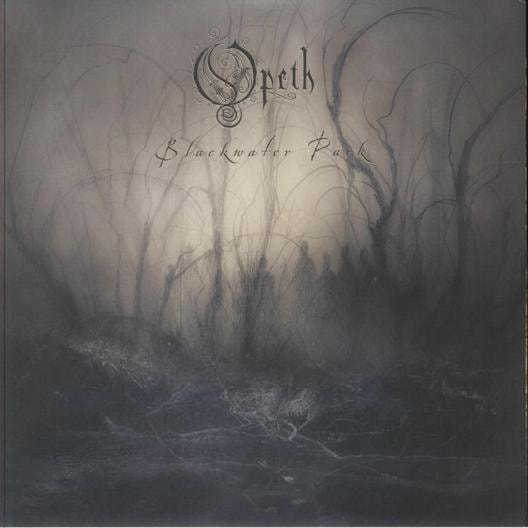
Blackwater Park
By Ryan Montgomery·October 2026·8 min read
By 2000, Opeth had made four albums and remained, outside Europe, an import-only cult band. Still Life (1999) had won them glowing reviews, and their performance at the Milwaukee Metalfest in 2000 had shown American fans that they could deliver their complex, subtle music live and still be death metal. But they needed something more.
That something arrived through a chance connection. An interviewer who was a friend of Mikael Åkerfeldt's, and knew he admired Porcupine Tree, gave Steven Wilson a copy of Still Life. Wilson loved it and contacted Åkerfeldt. Over dinner, the two discussed Wilson producing the next Opeth album, and after hearing Åkerfeldt's demos, he agreed.
The band also had a new label. They moved to Music for Nations in Europe, and Koch licensed the album for North America, promoting Opeth in the press and on college radio as the next big thing.
Six weeks at Fredman
Opeth entered Studio Fredman in Gothenburg on August 10, 2000. As with Still Life, they arrived with minimal rehearsal and no lyrics written, only four demos. They recorded over about six weeks, while the Swedish metal band Soilwork was working in the same building.
The band laid down drums, rhythm guitars, bass, and acoustic guitars first. Then Wilson arrived to produce the clean vocals and add guitar leads, keyboards, piano, Mellotron, and backing vocals. Åkerfeldt described the recording as rather smooth, and wrote that Wilson had an immense impact on it, and that the band entered a new phase after working with him.
The guitar setup was surprisingly simple. Most of the heavier riffs were played on a single black PRS CE 24, which Åkerfeldt used on every track except "Harvest," and the effects were subtle and natural. Fredrik Nordström and Wilson mixed the album, and Göran Finnberg mastered it. Travis Smith again created the artwork. The album took its name from an obscure German progressive rock band of the early 1970s.
Wilson's touch
Wilson's influence is audible everywhere. The sound is immaculate without being sterile — heavy where it needs to be brutal, transparent where it needs to breathe, and more dynamically alive than anything Opeth had recorded before. His voice appears on "The Drapery Falls," "The Funeral Portrait," "Harvest," and "Bleak" and on several songs his voice and Åkerfeldt's harmonize beautifully. Most importantly, he helped Åkerfeldt trust his clean singing voice as a lead instrument. As one reviewer put it, Wilson was the missing piece that brought harmony to the band's creative process.
Track by track
"The Leper Affinity" (10:23) opens the album with a ferocious death metal assault, among the most brutal music Opeth had recorded, before ending, unexpectedly, with a melancholy piano coda by Wilson — a moment one reviewer called a keyboard revelation.
"Bleak" (9:16) combines a lurching, odd riff with a lush, melodic chorus sung by Åkerfeldt and Wilson in harmony. It is one of the album's most distinctive songs and shows how Wilson's presence opened up the band's sound.
"Harvest" (6:01) is a gentle, acoustic song — the only track not built on Åkerfeldt's PRS — with soft vocals and a melancholy, folk-like melody. It became one of Opeth's most popular songs.
"The Drapery Falls" (10:54) is the album's centerpiece and one of the greatest songs Opeth ever wrote. It moves from a mournful clean opening with acoustic guitar through soaring melodies and crushing heaviness and back, over almost eleven minutes. A shortened radio edit was released as a promotional single.
"Dirge for November" (7:54) is slow, sepulchral, and mournful, opening with a long, quiet passage before erupting.
"The Funeral Portrait" (8:45) is one of the album's heaviest songs, with driving riffs and harmonies between Åkerfeldt and Wilson.
"Patterns in the Ivy" (1:52) is a brief, delicate acoustic instrumental — a moment of calm before the finale.
"Blackwater Park" (12:08), co-written by Åkerfeldt and Peter Lindgren, closes the album with twelve minutes of oppressive heaviness, moving through dark, atmospheric passages to a crushing, monumental final riff. It is often listed among the best metal songs of the 21st century.
Breakout
Blackwater Park was released in early 2001 to critical acclaim. It did not chart in the United States or the United Kingdom, but it transformed Opeth's career. AllMusic's Eduardo Rivadavia called it surely the band's coming-of-age album and an ideal introduction to its work. Touring followed, and the band's profile rose dramatically.
The partnership with Wilson continued with Deliverance (2002) and Damnation (2003), and Opeth went on to become one of the most important progressive bands in the world. In 2010, a Legacy Edition added a live recording of "The Leper Affinity" and a DVD with a 5.0 surround mix and a documentary about the album's making.
Legacy
Blackwater Park is now regarded as a modern metal classic. Decibel inducted it into its Hall of Fame, writing that it opened new doors not only for Opeth but for death metal as a genre. In 2020, Loudwire named it the best progressive metal album of all time. Its blend of brutality and beauty set a template for much of the progressive death metal that followed.
Why it still matters
Blackwater Park is the moment Opeth found the balance that would define them. The heavy passages are as brutal as anything in death metal, but the album's emotional power lies in its quiet moments: the acoustic guitars, the piano, the clean vocals, the melancholy atmosphere. It proved that death metal could be as subtle, beautiful, and emotionally rich as any progressive rock, and it introduced the world to one of the great creative partnerships in modern heavy music.
Essential tracks
• "The Drapery Falls"
• "Blackwater Park"
• "Bleak"
• "The Leper Affinity"
• "Harvest"
The views expressed in this article are those of the author and do not constitute fact, professional advice, or the position of any third party. Mythic Heavy LLC makes no warranty as to the accuracy of any statement or claim contained herein. Where this article references substance use or personal struggles, such references are drawn solely from statements made publicly by the individuals concerned. The authors of Mythic Heavy make no allegations against any person discussed on this site.