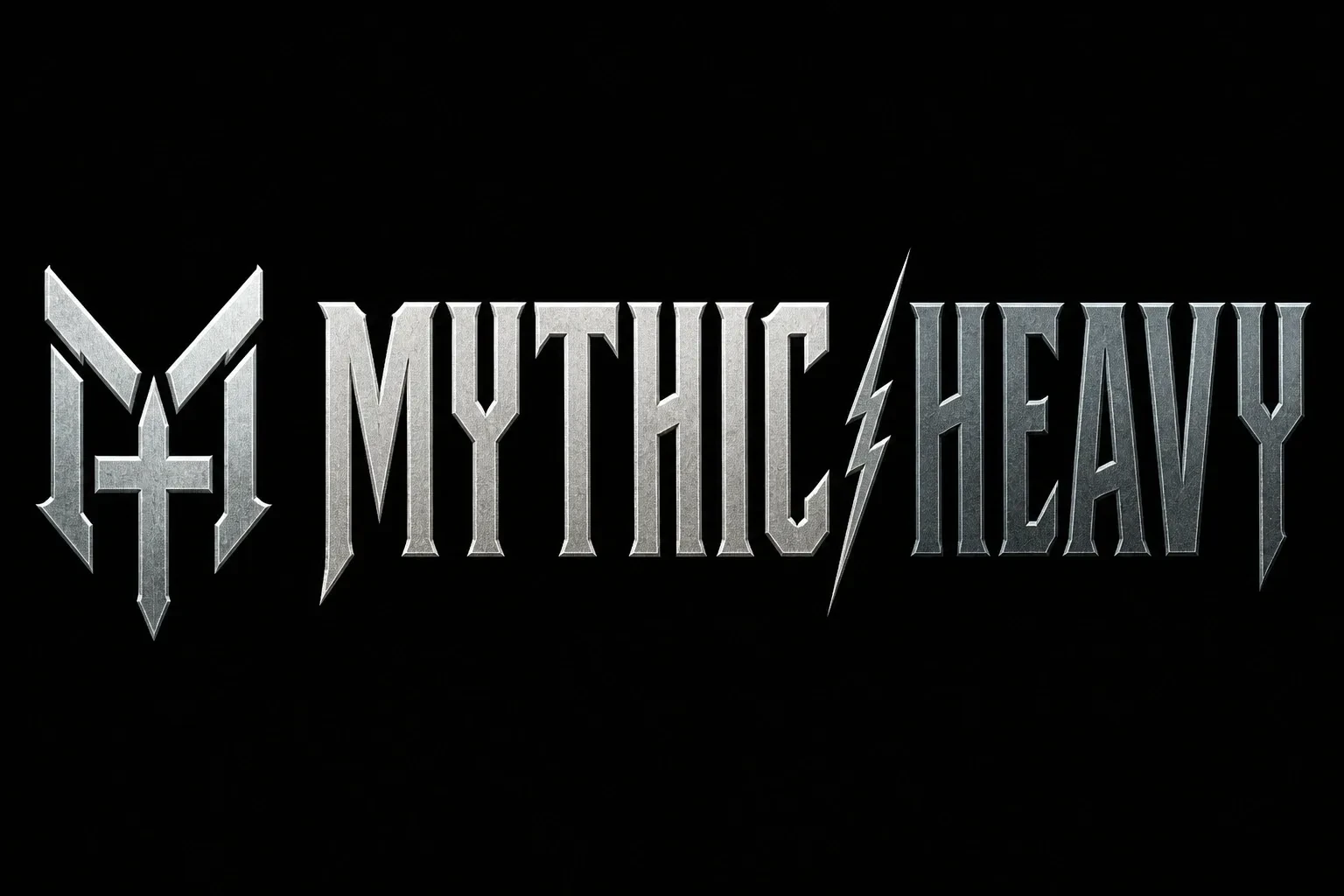
Opeth, "Deliverance"
Deliverance (2002) · Produced by Opeth and Steven Wilson · Mixed by Andy Sneap
By Ryan Montgomery·October 11, 2026·12 min read
Songs That Matter is a regular Mythic Heavy column. Each installment takes one song, not an album or a career, and asks a simple question: why does this one still hit so hard? This time: thirteen minutes of progressive death metal that end with one of the most famous riffs in modern metal, a riff that has closed nearly every Opeth concert for two decades.
A title track born in chaos
"Deliverance" is the title track and centerpiece of Opeth's sixth album, and it came out of the hardest period in the band's history. After the international breakthrough of Blackwater Park (2001), Mikael Åkerfeldt set himself an almost absurd challenge: to record two albums at once, a crushing heavy record and a gentle, melancholy one, to be released separately as Deliverance and Damnation.
With most of the material written, the band rehearsed just once before going into Nacksving Studios in Gothenburg in July 2002. The sessions were a disaster. Equipment kept breaking down, drum microphones moved or disappeared, and tensions inside the band ran high. The band moved to Studio Fredman, where they had made Blackwater Park, and Steven Wilson joined them to produce. Åkerfeldt later called the experience "the toughest test of our history." When the basic tracks were done, the heavy album went to England to be mixed by Andy Sneap at Backstage Studios. Åkerfeldt said Deliverance had been so poorly recorded, without any organization, that Sneap is credited in the sleeve as a "saviour" for rescuing it.
Remarkably, the band finished both albums in about seven weeks of studio time, the same amount of time they had spent on Blackwater Park alone. And the song at the center of the heavy record became their most enduring live anthem.
The Steven Wilson partnership
The road to "Deliverance" begins with a fan letter of sorts. Mikael Åkerfeldt had long admired Porcupine Tree, and an interviewer who knew it handed Steven Wilson a copy of Opeth's 1999 album Still Life. Wilson liked it so much that he got in touch with Åkerfeldt himself. Over dinner, the two discussed Wilson producing the next Opeth record, and after hearing Åkerfeldt's demos, he agreed.
That record was Blackwater Park, and Wilson's effect on it was profound. He arrived after the band had laid down drums, rhythm guitars, bass and acoustics, and focused on producing the clean vocals and adding guitar leads and textures. Åkerfeldt wrote that Wilson had an "immense impact on the recording" and that the band entered a new phase after working with him. Wilson pushed them to expand their sound with new sounds and production techniques, and above all he helped Åkerfeldt trust his clean singing voice as a lead instrument rather than an occasional contrast to the growls.
On Deliverance, the partnership deepened. Wilson is credited as co-producer and engineer, and he contributed backing vocals, guitars, piano, Mellotron and keyboards. His fingerprints are in the record's layered atmospheres, its eerie keyboard washes and the clarity of its clean vocal passages. Damnation, the gentle companion album, would be the last Opeth record Wilson produced, though he later mixed Heritage and Pale Communion. The two men remained close collaborators, and in 2012 they released an album together as Storm Corrosion.
Songwriting growth
By 2002, Åkerfeldt was writing every note and every word of Opeth's music, and "Deliverance" shows how far he had come. The early Opeth albums had been long, flowing, sometimes meandering pieces in which death metal passages and acoustic interludes alternated almost like chapters in a book. On "Deliverance," the contrasts are sharper and the structure tighter, even across more than thirteen minutes.
The decision to split the heavy and gentle material across two albums mattered. Freed from having to fit everything onto one record, Åkerfeldt could make Deliverance the heaviest album Opeth had ever recorded, and its title track the heaviest of all. It moves from brutal, growled sections built on dense, churning riffs into passages of eerie calm, with clean vocals and ringing guitars, then back into the storm. Every shift feels purposeful, as though the song were being steered rather than allowed to wander.
Riff craft and complexity
The riffs on "Deliverance" are among the most intricate Åkerfeldt ever wrote. They rarely sit squarely on the beat. Instead they lurch, stutter and syncopate, with accents landing in unexpected places so the music feels as if it is constantly pulling against its own pulse. Åkerfeldt and fellow guitarist Peter Lindgren lock their parts together with surgical precision, Martín Méndez's bass shadows them closely, and Martin Lopez's drumming, informed by jazz and Latin rhythms, keeps everything grooving rather than merely pounding.
That combination of complexity and groove is the key to Opeth's heaviness. The riffs are difficult to play and hard to count, but they never feel like an exercise. They feel physical, like something you could bang your head to if you could only work out where the beat was. And nowhere is that truer than in the song's final minutes.
The finale
After more than ten minutes of storms and calms, "Deliverance" does something unexpected. It stops evolving.
The last vocal section falls away, and the band drops into a single riff: tight, palm-muted and staccato, a short, stabbing figure punctuated by sudden stops. Guitars, bass and kick drum hit together, in perfect unison, like a machine stamping metal. Then the pattern repeats. And repeats. And repeats again.
On paper, it sounds simple. In practice, it is one of the most disorienting and physically overwhelming passages in modern metal. The accents fall in irregular places, and the gaps between the hits are never quite where the body expects them to be. Just as you think you have found the downbeat, the pattern shifts beneath you. Listeners and musicians have spent two decades arguing about how to count it, and part of its power is that it is so hard to pin down. You can't settle into it. You can only hold on.
The repetition is the point. Most progressive metal rewards attention by constantly changing. This finale does the opposite. It takes one idea and hammers it home with relentless, mechanical precision until the repetition itself becomes the source of tension. Each cycle feels heavier than the last, not because the riff gets louder but because the listener's nerves get tighter. Around it, small variations creep in — subtle shifts in the drumming, cymbal accents, the guitars' attack — so that the passage never feels static, only inexorable.
Then, at the moment it seems it could go on forever, it ends. Abruptly. The final hit lands, and there is silence.
The effect is cathartic in a way that's hard to describe. After thirteen minutes of light and darkness, the song resolves not into melody or calm but into pure, distilled rhythm and weight. It is the opposite of a fade-out. It is a door slamming shut. For many fans, it is the single most satisfying moment in Opeth's entire catalog; one listener on Rate Your Music summed up a common feeling, saying the band could keep playing the outro for another half hour and they wouldn't complain.
The finale also shows how far metal had traveled. Its tight, syncopated, machine-like riffing anticipates the rhythmic style that would dominate progressive and technical metal in the years that followed. But it has something many of its descendants lack: context. It hits so hard because of everything that comes before it. Without the long journey through the song's shadows, the finale would be a great riff. With them, it becomes a deliverance in every sense.
The closer
"Deliverance" has been part of Opeth's live set since the album came out. On the 2003 tour that produced the live DVD and album Lamentations, recorded at London's Shepherd's Bush Empire, it was played in a heavy set that followed a full performance of Damnation. Over the years that followed, it became something more: the band's standard closing song.
Concert reviews from the past decade tell the same story again and again. On the 2016 Sorceress tour, Opeth played special shows split into a set of songs from across their career and a second set drawn entirely from Deliverance and Damnation; in New York, Toronto and Sydney, the night ended with "Deliverance." A reviewer in Tilburg in 2024 noted that the encore was, with no surprise at all, "Deliverance." In Glasgow in 2025, Åkerfeldt teased the crowd by asking whether the song was twelve or fourteen minutes long, and the reviewer described its "regimented chugging outro" freezing the band into statues, only their hands moving in sync under flashing red lights, as the whole crowd fell into a trance. In Amsterdam, Philadelphia and at the Piece Hall in Halifax in August 2026, it was the encore once more.
Why has it lasted so long? Partly because it works so perfectly as an ending. The song contains every side of Opeth — the brutality, the melody, the atmosphere and the complexity — and then distills it into that final, unforgettable riff. A reviewer at the Sydney Opera House observed that it catered to every kind of Opeth fan, those who loved the old death metal style and those who preferred the softer progressive band. Opeth's music has changed dramatically since 2002; after 2011's Heritage the band largely abandoned growled vocals for a decade. But "Deliverance" has remained, the one song they almost always play, a constant through every reinvention.
And, simply, the finale is thrilling to experience live. Thousands of people trying to headbang in unison to a riff almost nobody can count, waiting for the moment the music stops dead, is one of the great communal rituals in modern metal.
Why it matters
It is Opeth's songwriting at its most powerful. "Deliverance" shows Åkerfeldt at the height of his ability to build long, complex songs that feel inevitable rather than indulgent.
It captures a great creative partnership. The collaboration between Åkerfeldt and Steven Wilson helped turn a respected underground death metal band into one of the most important progressive bands in the world, and this song is one of its finest products.
It proves that repetition can be as powerful as complexity. After thirteen minutes of constant change, the most memorable thing in the song is a single riff, played over and over.
It is the song the fans won't let go. More than two decades after its release, it still closes the show, and the crowd still waits for that final hit.
How to listen
Play the whole album through once, then return to the title track on its own and listen loud, ideally through good headphones or a proper sound system. Don't skip ahead to the ending. The finale only hits the way it should if you've traveled the full thirteen minutes to get there. Then find a live version — Lamentations is a good start — and hear how it lands in front of a crowd.
The views expressed in this article are those of the author and do not constitute fact, professional advice, or the position of any third party. Mythic Heavy LLC makes no warranty as to the accuracy of any statement or claim contained herein. Where this article references substance use or personal struggles, such references are drawn solely from statements made publicly by the individuals concerned. The authors of Mythic Heavy make no allegations against any person discussed on this site.